| Where | St Mary’s Church | Type of Event | Summer Visit |
| When | Wednesday 16th July 2025 | Tutor | Caroline and Maurice Osgood |
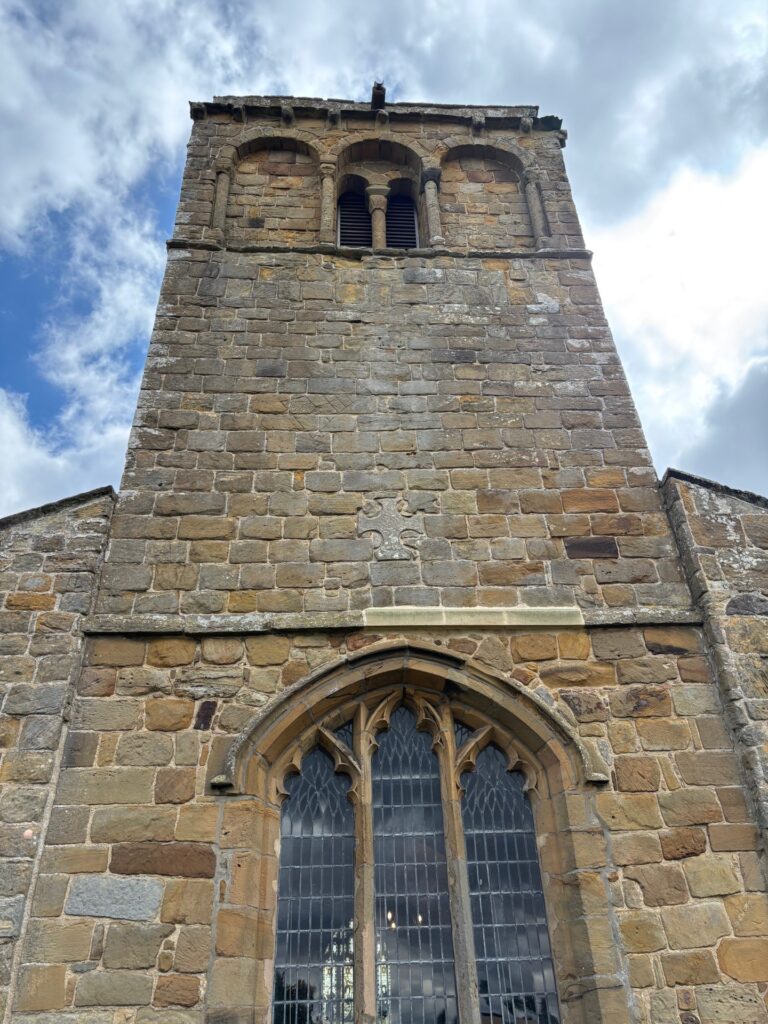
The visit to St Mary’s was on a lovely summer’s day. From the main road you can see a charming stone church, Norman in aspect. The medieval village which once surrounded it has long since disappeared leaving the church standing prominently visible in the midst of farmland. It seems the members of the Local History Group, and others, who joined the visit to St Mary’s shared a frequent observation. Most stated they had passed the church on numerous occasions and thought they should visit one day, and never had. Now they have.
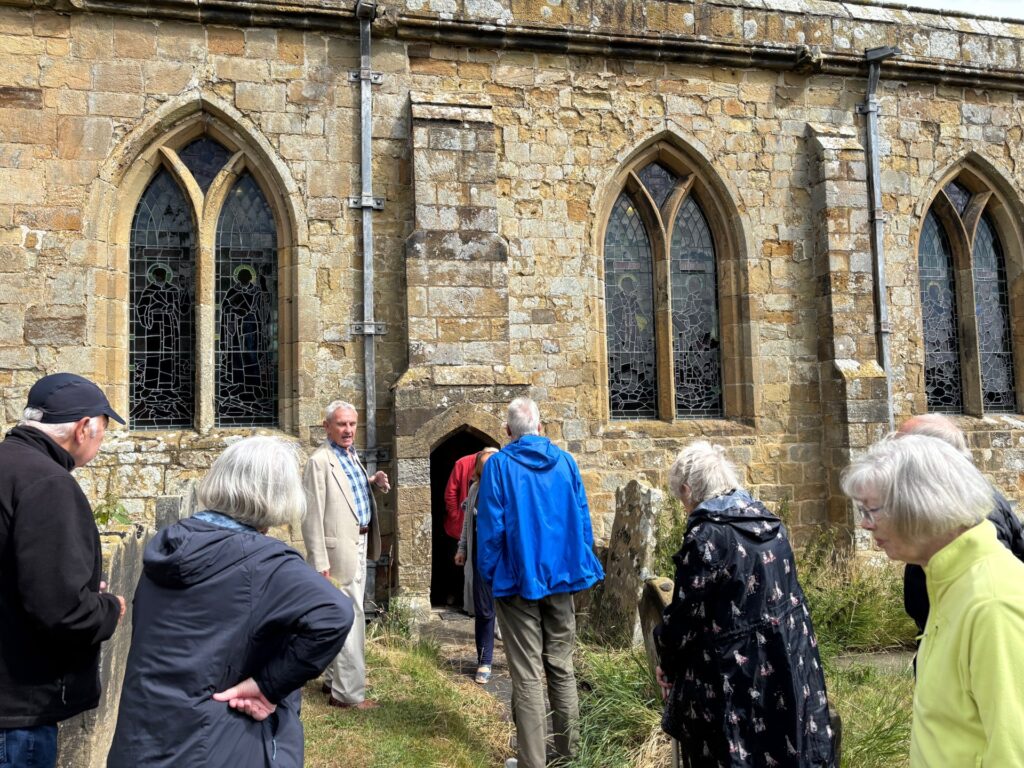
When we arrived at the church we were met by our guides, Caroline and Maurice Osgood, who gave us information, and by Sheilagh who provided refreshments. We were made very welcome and we wish to extend our thanks to them for making our day so pleasant.
Although the church has a Norman look the site dates back to Anglo-Saxon: pre-conquest. The Norman tower was the first part to be built. William II (Rufus) granted the church to the Bishop of Durham. Leake church became a peculiar of Durham. Therefore, it fell under the direct jurisdiction of the Bishop of Durham rather than the Archbishop of York, despite being geographically in Yorkshire.
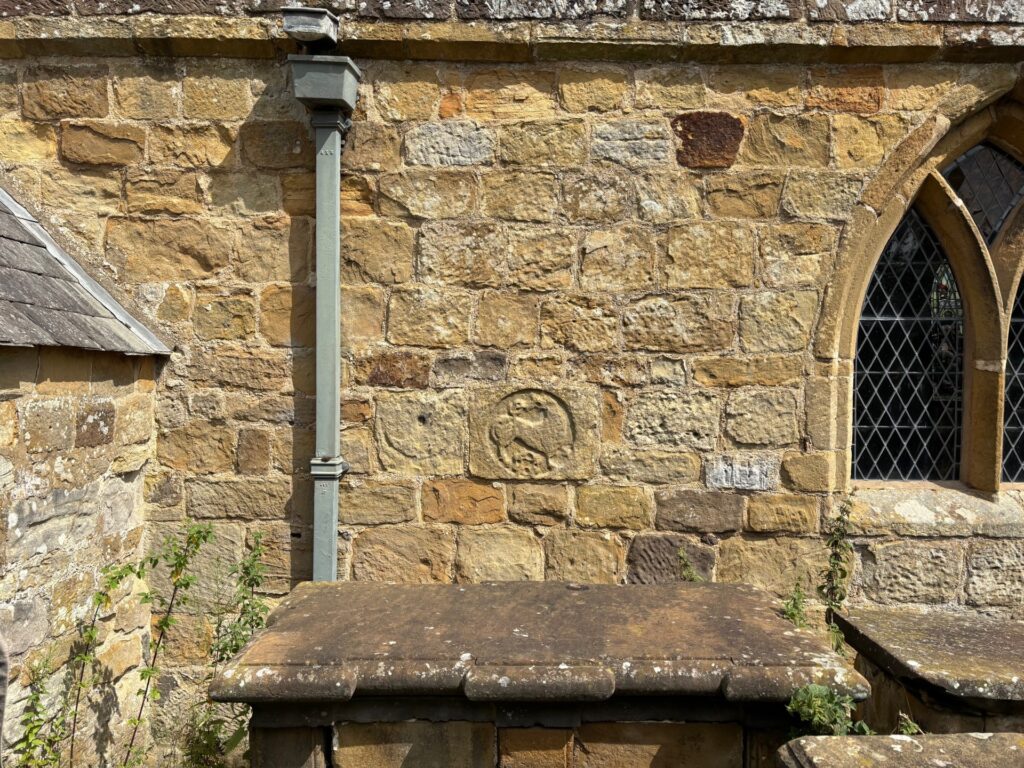
There is much to see at the church. The structure has had many additions and modifications through the 13th, 15th, 19th and 20th centuries. The aisles and windows are particularly significant. Within that there are stone carvings. Two of them are of human heads, reputed to be self-portraits of the masons who made them. No one is sure. Some of the pews have elaborately carved ends. In one case the end was recovered from a fire and preserved. It seems Bridlington Priory has a claim and wants the pew ends back! Indeed, there seem to be a lot of features of the church which have an air of mystery.
Features outside the church include sundials and mass dials set into the walls. By the porch there is the site of re-burial of the body of a child disturbed during building work. Unusually, they had also discovered the skull of a polecat, but no one can account for it. Finally, in 1852 a pit containing 500 bodies was uncovered. Nearby there were coins from the time of Edward I. No one knows how or why the bodies came to be there. There is no sign of the coins now.
A really interesting church, and everywhere a mystery.
Later, we retired for lunch at the Old Oak Tree at South Kilvington.
All made for an enjoyable day. But these days do not just happen. Many thanks to Jackie for organising it so well.