| Where | Ripon and Boroughbridge | Type of Event | Guided Tour of Sites |
| When | Saturday 17th May | Tutor | Roger Inman |
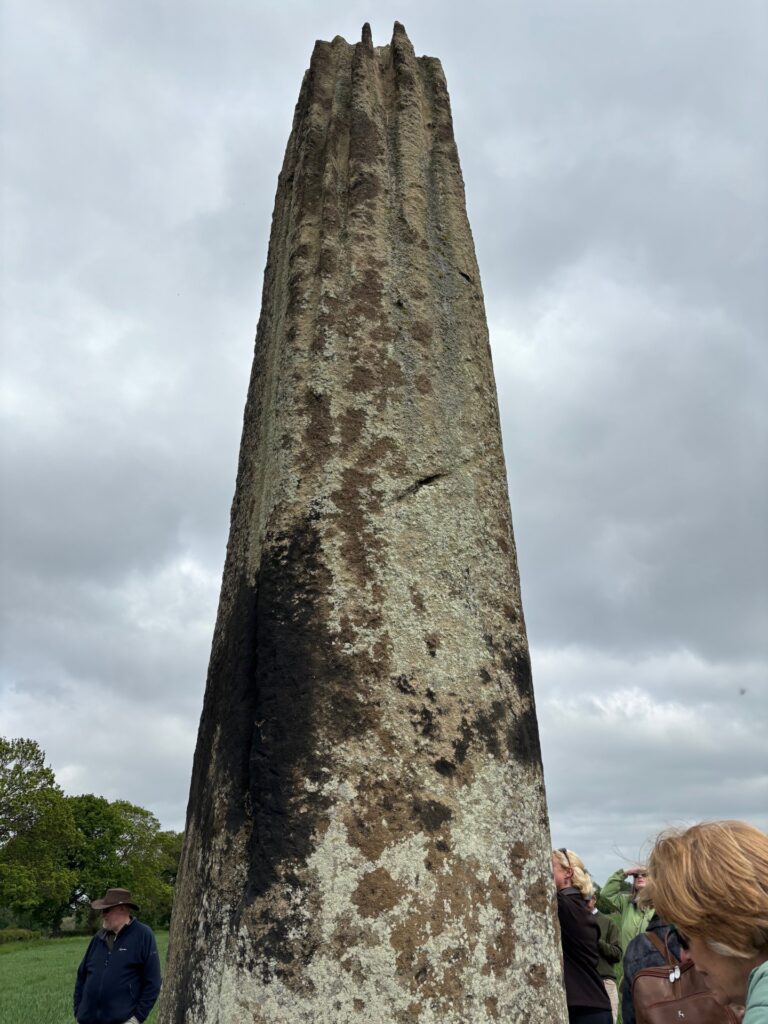
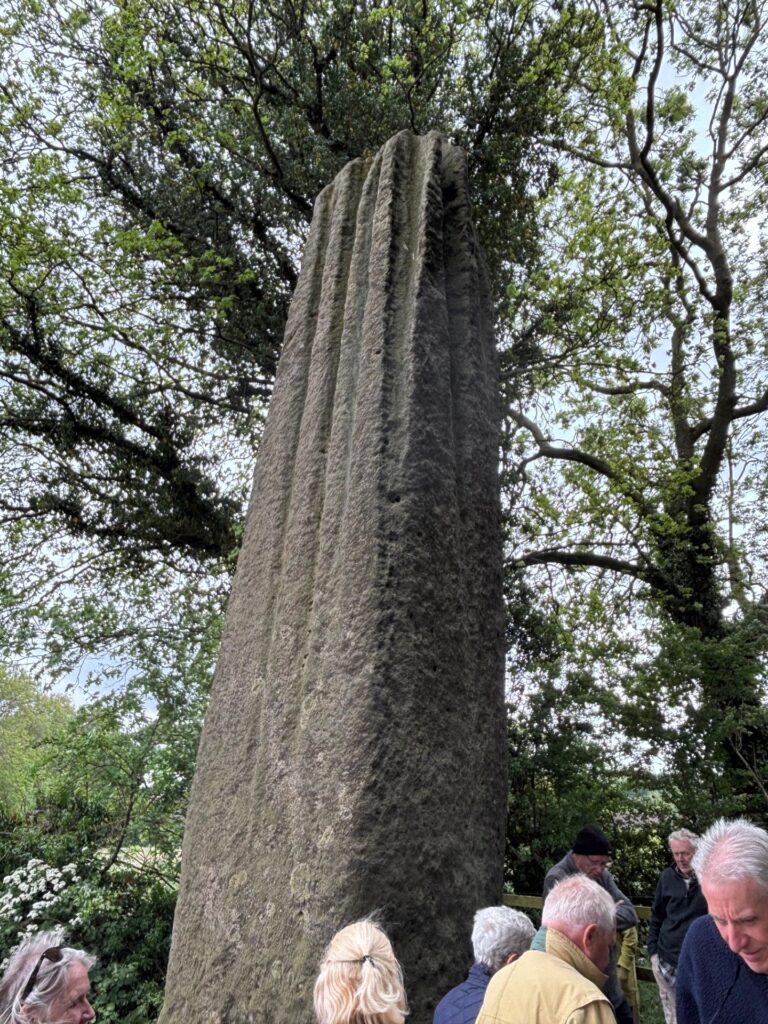
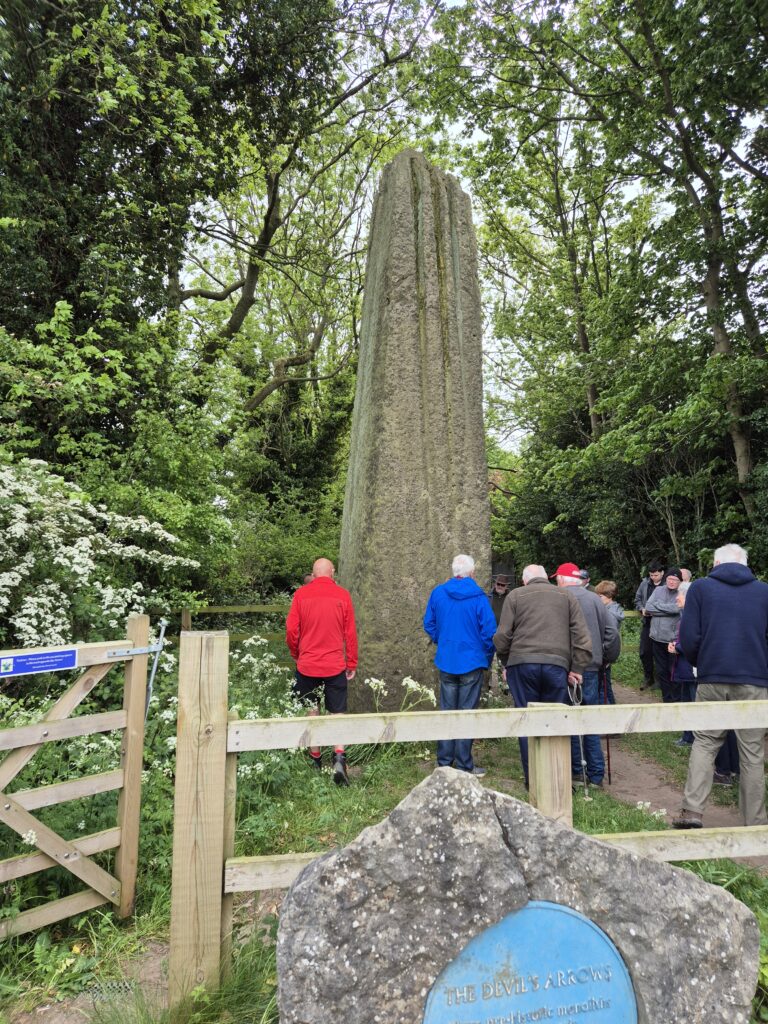
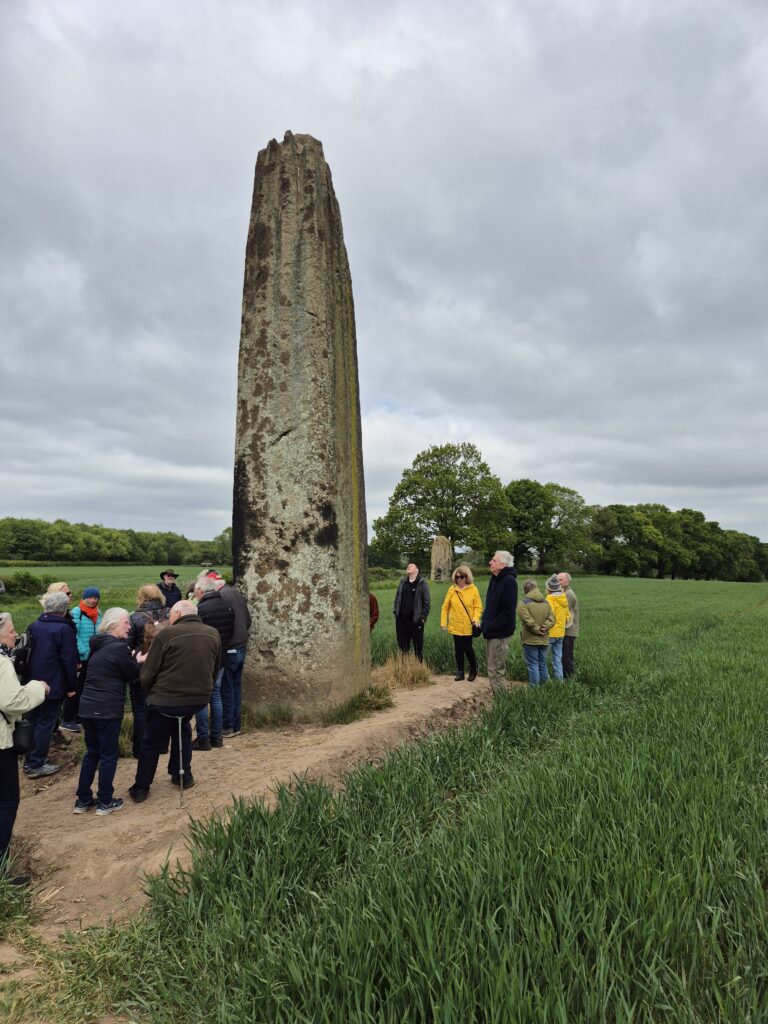
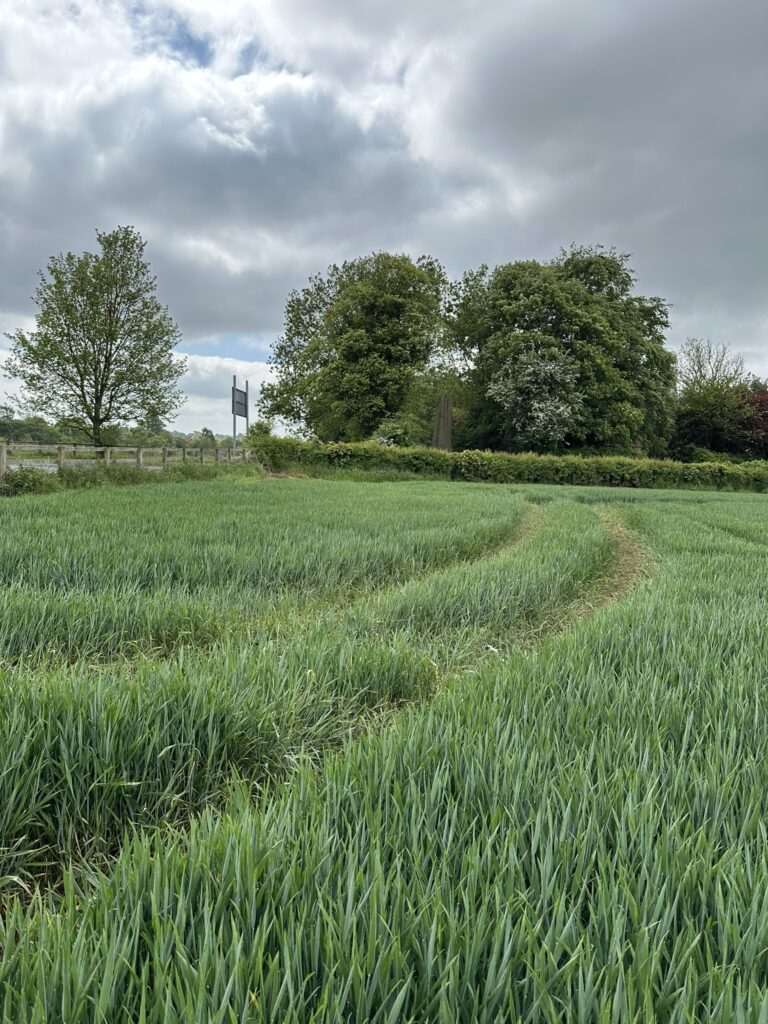
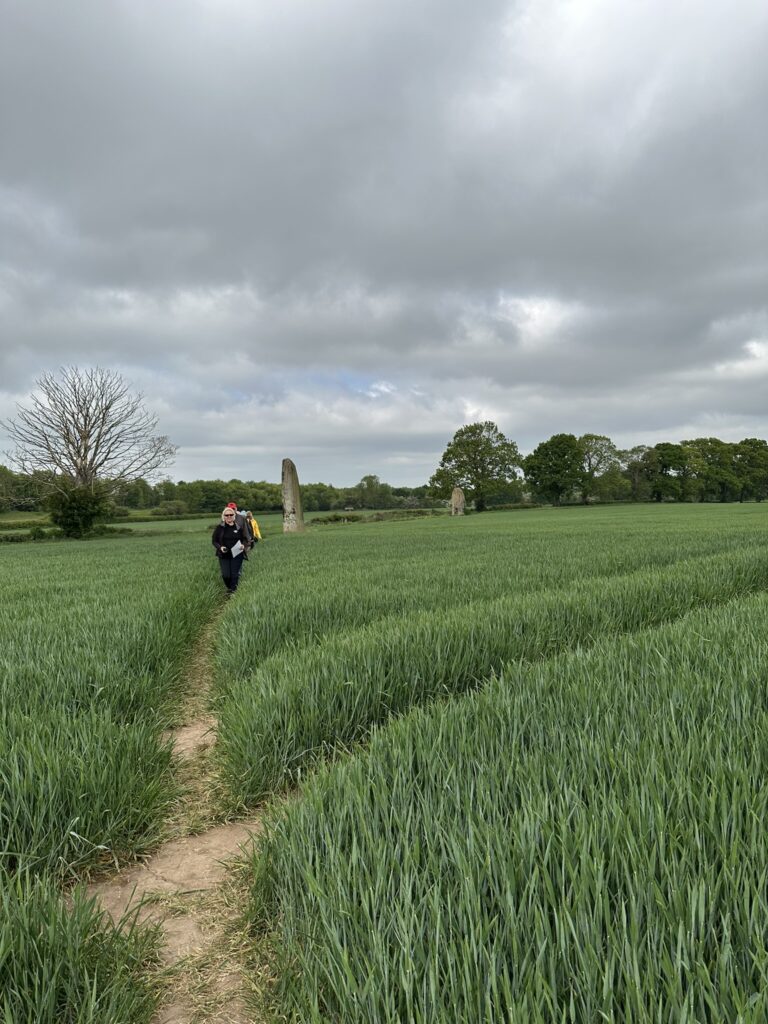
On Saturday 17th May 2025, archaeologist and friend Roger Inman once again took a party on a magical history tour to 3 contrasting sites in the Ripon/Boroughbridge area. Roger had hired a bus, organised 2 excellent guides and invited various interested groups to join him. More than 30 people accepted the invitation including 13 of our members. First stop was at the Devil’s Arrows, 3 standing stones from Neolithic or early Bronze age times i.e. about 4000 years ago, running almost in a straight line SSE to NNW from a wood then across a road into a field. The tallest is at the SE end and is taller than any of the stones at Stonehenge, being nearly 7 metres in height. A fourth stone was recorded in the past and there were rumours of a fifth. The stones are millstone grit and have been greatly weathered resulting in spectacular grooves from the apices part-way down the sides. Emma Watson, our guide, told us that no one is sure what they were for, but they are assumed to have had a ceremonial purpose.
Our second stop was Ripon Cathedral where Maureen Norrie gave us a detailed history of the architectural difficulties of building such a massive edifice on such an uneven and sloping site. Extending the width of the nave in particular required extra buttresses. We then entered the Cathedral and were able to visit the claustrophobic Anglo-Saxon crypt, the oldest church structure in the UK, built by St Wilfred in 672 AD and said to be based on the tomb of Jesus. It was quite amazing. St Wilfred’s Church was destroyed (apart from the crypt) and the present Cathedral Church is the fourth on the site with the west end little changed since the 13thcentury. There was much to marvel at, including misericords which apparently gave inspiration to Lewis Carroll’s whimsical animals and a carved wooden hand above the choir which was used to beat time for the choristers.
The final site was the three Thornborough Henges, huge circular banked enclosures from similar times to the Devil’s Arrows. There is evidence that Gypsum was used to cover the high banks to make them white and visible for miles around. They are also SE to NW aligned and probably had a role in ritual, but again it is impossible to be sure, especially as so little archaeological investigation has been done – much to Emma’s displeasure, given that this area has so many hints of being busy and relatively heavily populated in prehistoric times. There is much yet to be discovered…..