| Where | St Mary’s Church | Type of Event | Summer Visit |
| When | Wednesday 17th June 2026 | Tutor | Penelope Dawson-Brown |
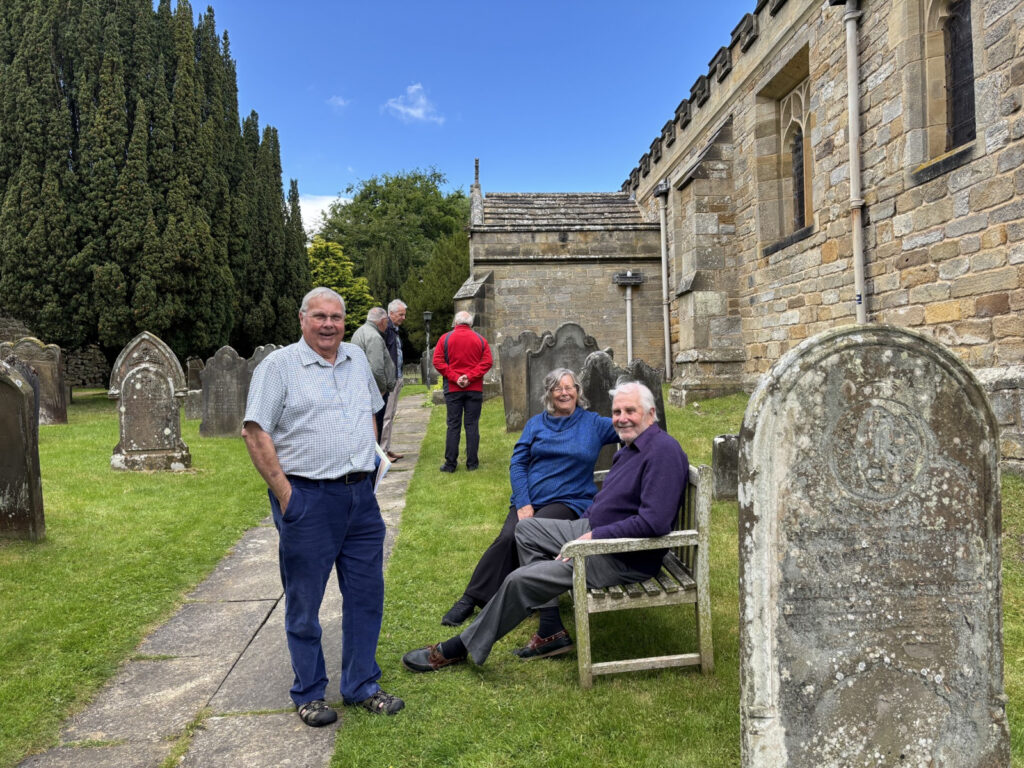
The visit to St Mary’s was on a lovely summer’s day. Seventeen members of the Local History Group participated. It seems the members of the Local History Group who joined the visit to St Mary’s shared a frequent observation. Most stated they knew of the church at Lastingham, and its part in the development of the early church in England, but had never visited. They thought they should visit one day, and never had, and now they have.
When we arrived at the church we were met by our guide, Penelope Dawson-Brown, the churchwarden, who gave us information, and who provided refreshments. We were made very welcome and we wish to extend our thanks to Penelope for making our visit so pleasant.
Although the church has been altered over the years, the site dates back to Anglo-Saxon: pre-conquest. Bede writes about the founding of the monastery at Lastingham by St Cedd, and of St Chad, his brother, who succeeded him as abbot. The antiquity is evidenced by St Cedd’s death in 664 CE. The stone church mentioned by Bede replaced the earlier wooden structure. Some of the original stones can still be seen in the crypt.
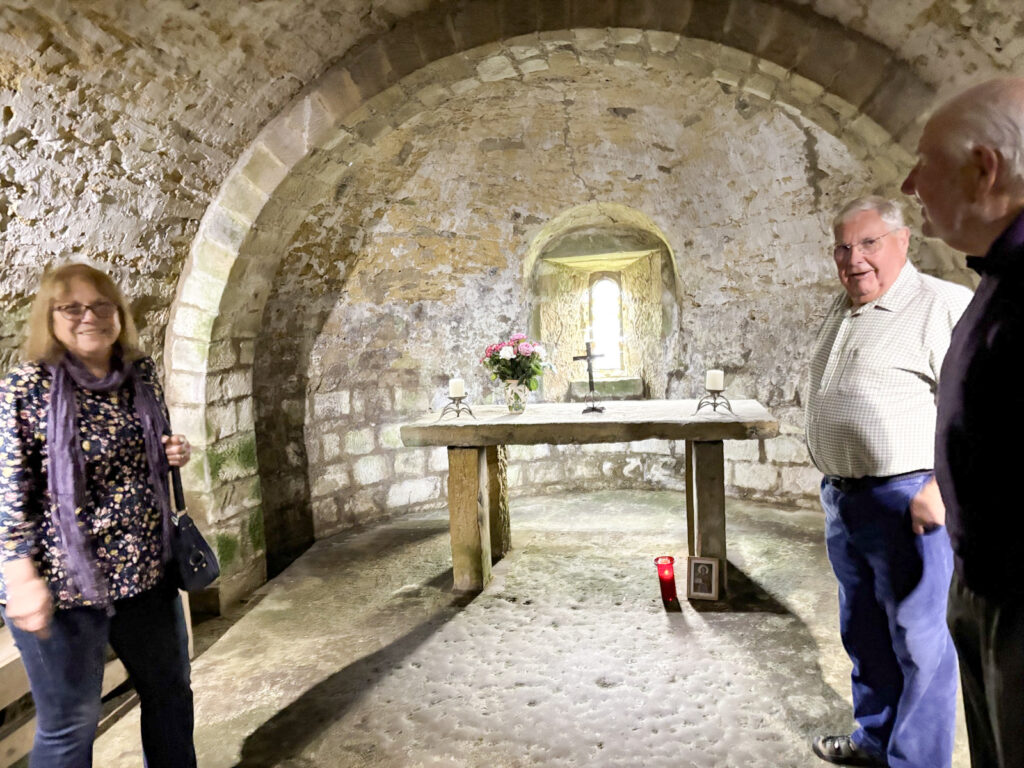
The crypt was probably built in 11th century as part of the project to restore the monastery as a Benedictine house. It was built as a shrine over the place where St Cedd is thought to be buried. The project was abandoned and the abbey at Lastingham was never built. The work that was completed forms the basis of the church seen at Lastingham today. The four Norman columns in the crypt are standing on pre-conquest foundations. The crypt is thought to be only crypt in England to have an apse. It also has a chancel, nave and side aisles. The crypt has remained virtually unchanged since the time of William the Conqueror.
There is much to see at the church. The structure has had many additions and modifications through the 13th, 14th, 15th and 19thcenturies. The aisles, windows and bell tower are particularly significant in the earlier centuries. There was significant change in the 19th century as a result of the activity of Dr Sydney Ringer. This work included reroofing, new floors, new windows and the cleaning of church and crypt.
Features visible from the outside the church included a view of the stained glass window which is set in the apse of the crypt. The window dates to the 13th century, at least. In the village of Lastingham there are three wells, one to each of the saints associated with the church-St Cedd, St Chad and St Ovin.
A really interesting church, and items of interest everywhere.
Later, we retired for lunch at the Blacksmith’s Arms in Lastingham.
All made for an enjoyable day. But these days do not just happen. Many thanks to Brian for organising it so well.